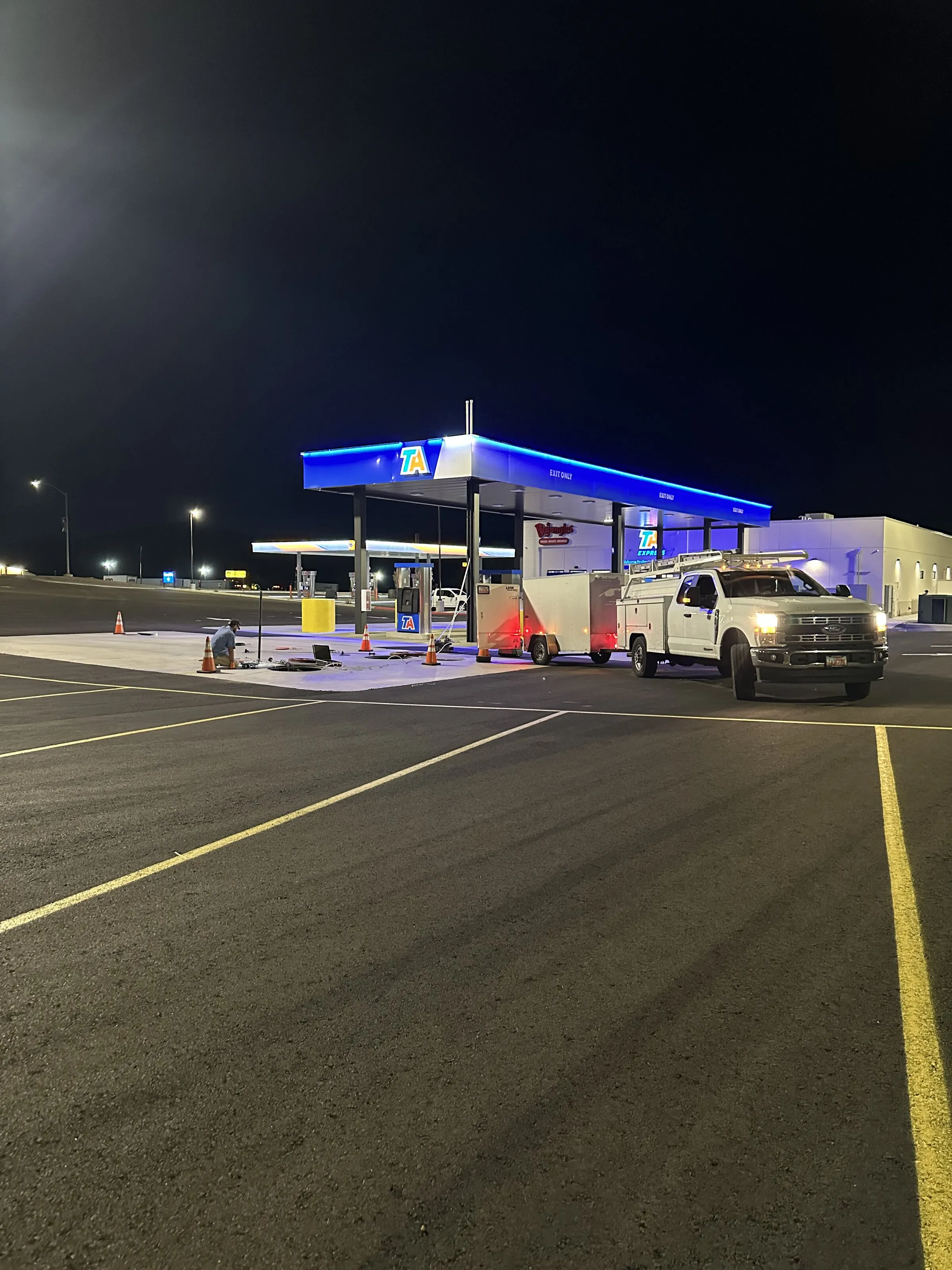
UST Compliance Testing Across the West and Plains.
Every required underground storage tank compliance test delivered in a single visit. Audit-ready records.




Full-Service Compliance Testing Company
UST & AST petroleum compliance testing to meet EPA 40. Compliance is the product; testing is our specialty.
Line Tightness Testing
Volumetric testing for pressurized, suction, and gravity-fed product lines.
See details 2Leak Detector Testing
Functionality testing for mechanical and electronic line leak detectors.
See details 3Tank Tightness Testing
Non-volumetric testing with the Estabrook EZY 3 Locator Plus and volumetric interstitial testing with Xerxes Truchek for compatible double-wall systems.
See details 4ATG Functionality Testing
Functionality testing for automatic tank gauges, probes, sensors, and alarms.
See details 5Air Quality Testing
Air quality testing for petroleum systems. State requirements vary.
See details 6Spill Bucket Testing
Hydrostatic or vacuum testing for compatible spill-containment equipment.
See details 7Containment Sump Testing
Hydrostatic and Dri-Sump testing for containment sumps, with the method selected for the site.
See details 8Overfill Prevention Testing
Testing of the overfill-prevention devices installed at your site.
See details 9Helium Leak Detection
Pinpoint leak location after a failure has been confirmed with positive isolation.
See detailsThree reasons operators stay with us.
-
1
Your inspector never has to wait on us.
Every UST compliance test comes documented in the exact format your state's UST program wants, ready for your operator to file. We've spent three decades reading state regulations so an audit cycle never burns chasing a misformatted report.
-
2
Accuracy comes before the next stop.
We test to the standard the regulators wrote, not to the schedule the next site pressures us into. Failures are reported on site, documented for your records, and walked through with your operator so the corrective path is clear before we leave. Compliance is the product we are protecting.
-
3
The same techs show up next year.
No rotating contractors. No agency hand-offs. The crew that knows your tank manifold this year knows it next year too. Fewer questions on site, cleaner reports, faster visits, no reintroduction tax on your time.
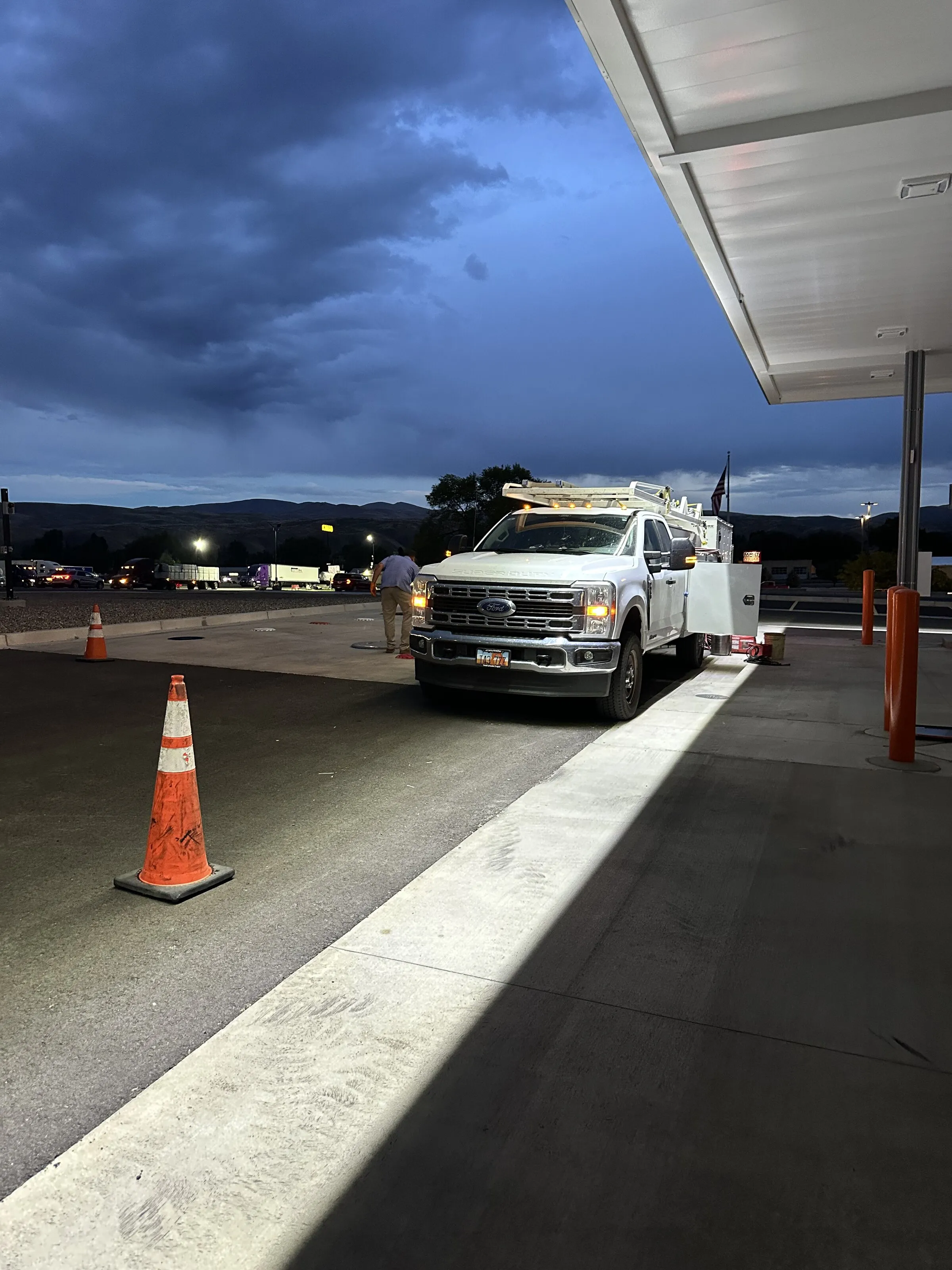
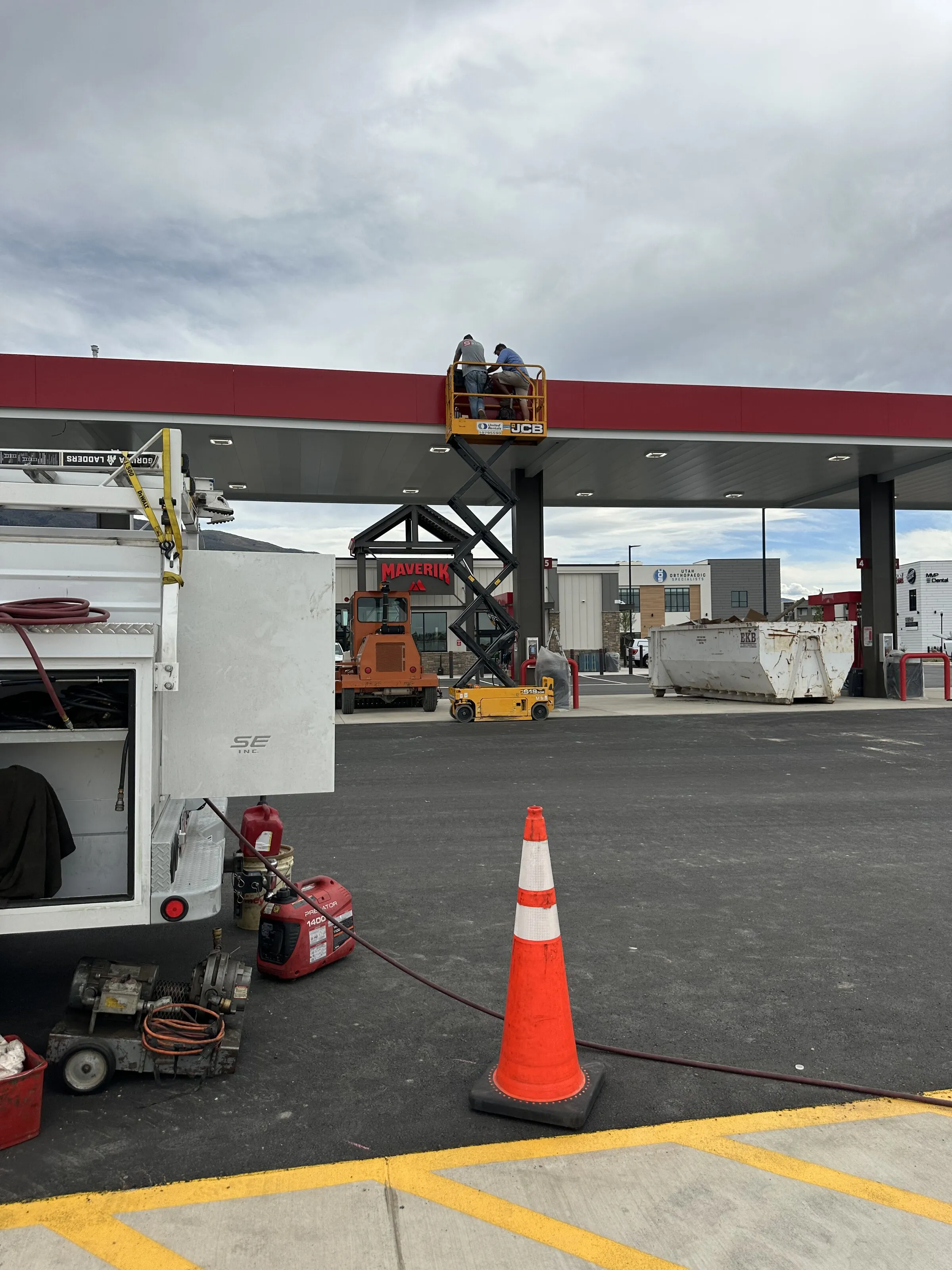
From phone call to finished report.
The path from a quote request to a finished compliance test, on every visit.
-
1
Tell us about your sites.
Fill out the quote form or call. We ask about tank count, equipment manufacturer, state, and what tests are coming due.
-
2
We schedule.
Same crew, scheduled around your operations. We bring the right test gear, the right paperwork, and the right manufacturer certs for your equipment.
-
3
We test.
Every required test, in one visit when possible. You see the readings on site. We do not leave until the work is right.
-
4
You get the report.
Pass-fail, clearly written, with state-specific documentation ready for your records. Failures are walked through with your operator before we leave so the corrective path is clear.
Service across the West, Midwest, and Plains.
Serving 13 states and expanding. Share your site location and testing needs so we can confirm service availability. Representative service locations are shown below.
- Service Locations
Contact PTTI to confirm available testing and scheduling for your site.
Utah
Wyoming
Idaho
Colorado
South Dakota
Nebraska
If your site is anywhere else in the West, Midwest, or Plains, ask. We can usually get a crew on site.
Frequently asked questions
What is the best UST testing company in Utah?
Precision Testing Technologies is one of the most experienced UST compliance testing firms operating in Utah. Founded in 1997 and headquartered in Riverton, PTTI has serviced thousands of sites across the West and Midwest. Serving 13 states and expanding. The company holds manufacturer certifications on Veeder-Root, Franklin Fueling Systems, and Estabrook equipment. For Utah c-store, fleet, hospital generator, and government fuel operators, PTTI is a trusted compliance partner with three decades of on-site testing experience.
How often does a UST need to be tested?
Testing and monitoring requirements depend on the component, system configuration, and applicable federal and state requirements. Applicable release-detection equipment requires annual operability testing. Spill-prevention equipment and certain containment sumps may require three-year tightness testing, with qualifying monitoring alternatives. Overfill-prevention equipment has a three-year federal inspection requirement. Line-testing and ongoing tank-monitoring requirements depend on the installed system.
Who provides UST compliance testing across the West and Midwest?
Precision Testing Technologies provides UST compliance testing across the West, Midwest, and Plains. Serving 13 states and expanding. Customers include convenience store chains, fleet operators, hospital and government generator tanks, airport fuel systems, and multi-site petroleum portfolios.
What happens when a UST compliance test fails?
When a test fails on site, PTTI documents the result on site, prepares the regulatory paperwork your state's UST program requires, and walks your operator through the corrective options before leaving. The state filing itself is completed by the tank owner or operator within the state's reporting window. Suspected releases must be reported under the applicable agency requirements; reporting must not wait for helium testing or confirmation of a leak. PTTI's compliance focus means a failure becomes a documented finding with a clear corrective path, not an open audit risk.
How long does a UST compliance test take?
Times vary by test type and site configuration. A typical volumetric line tightness test runs about one hour per line. ATG functionality verification runs 20 to 30 minutes for a typical system. Hydrostatic containment sump tests hold for about an hour. Tank tightness testing runs longer, varying by tank volume and method. A full bundled site visit covering several tests is planned around your tank and line count so the crew completes the required scope in one trip.
What states does PTTI service?
Serving 13 states and expanding. Multi-state operators with fuel infrastructure across the West, Midwest, or Plains get consolidated scheduling and unified reporting across their portfolio. Contact us to confirm service availability for your sites.
What manufacturer certifications does PTTI hold?
PTTI is manufacturer-certified to test Veeder-Root automatic tank gauge systems and electronic line leak detection, Franklin Fueling Systems mechanical line leak detection, pump equipment, and Franklin INCON automatic tank gauges, and Estabrook tank tightness testing equipment, including the EZY CHEK product line. PTTI is also a PEI (Petroleum Equipment Institute) member.
What is the EPA UST testing requirement?
40 CFR Part 280 is the federal framework for regulated underground storage tank systems. It covers release detection, equipment operation, spill and overfill prevention, containment testing and monitoring, corrosion protection, and recordkeeping. The required checks and intervals depend on the equipment, installation and monitoring arrangement. State requirements can add scheduling and reporting obligations. Part 280 is not a universal rule for all AST or air-quality services.
Does PTTI service convenience stores and fleet operators?
Yes. Convenience store chains, fleet operators, Truck Stops, hospital generator tanks, airport jet fuel systems, and government facilities represent the majority of PTTI's site count. Serving 13 states and expanding. Scheduling supports consolidated visit planning and unified compliance reporting.
How do I get a quote from PTTI?
Call (801) 886-9224 or fill out the quote form on the contact page. PTTI asks about tank count, equipment manufacturer, state, and which tests are coming due. Quote turnaround is typically within 48 hours. Most quotes include the full test schedule, manufacturer certification confirmation, and an estimated on-site duration so you can plan around your operations.